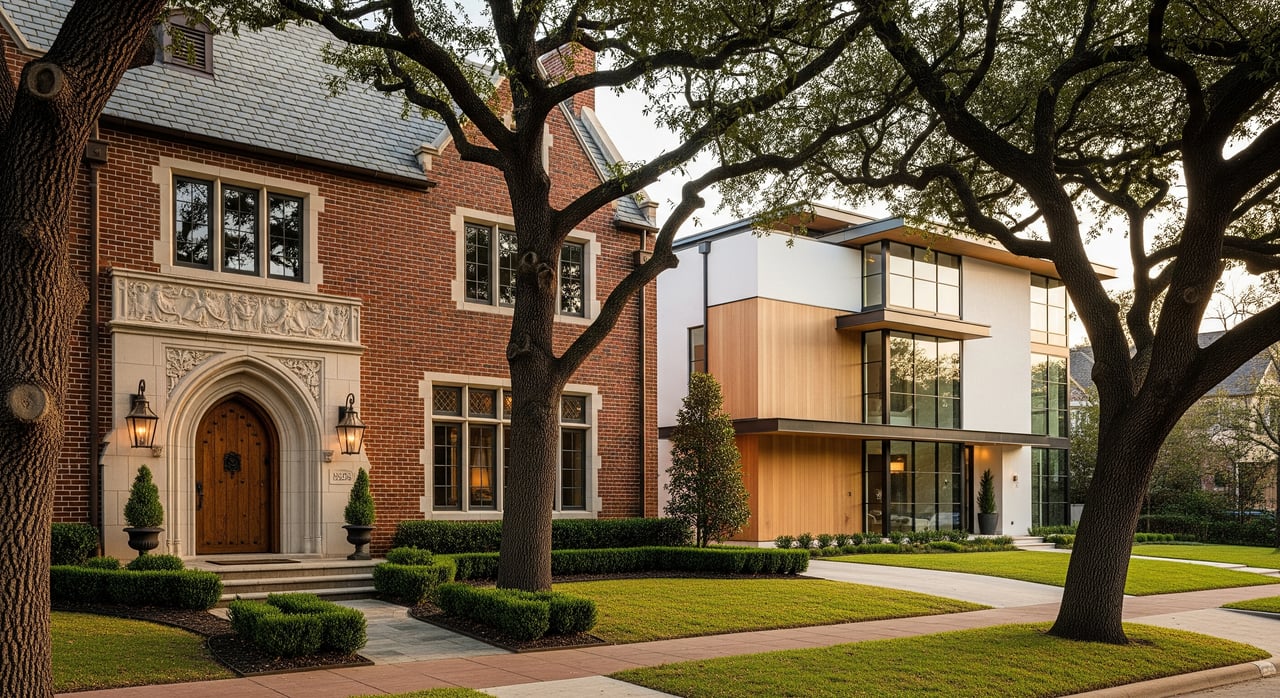
Thinking about buying or selling in University Park and torn between a new build or a historic home? You’re not alone. In a neighborhood prized for tree-lined streets, proximity to SMU, and access to Highland Park ISD boundaries, this decision shapes your budget, timeline, and daily life. In this guide, you’ll learn how to weigh costs, permits, design rules, and resale so you can move forward with confidence. Let’s dive in.
University Park at a glance
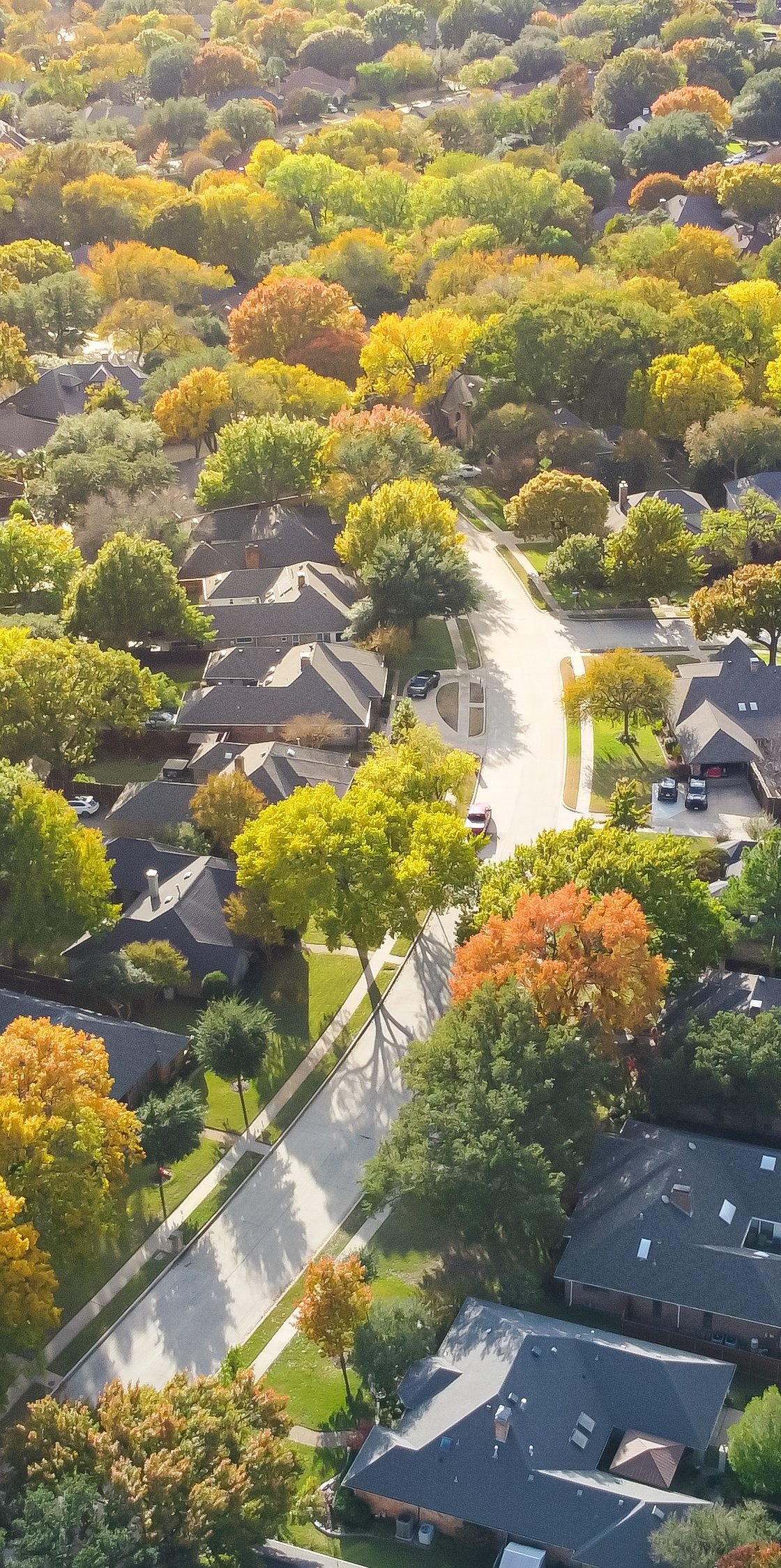
University Park sits just north of downtown Dallas and borders Southern Methodist University. Many buyers choose it for established neighborhoods, mature trees, and access to Highland Park ISD boundaries. With limited land and steady demand, you’ll often see older homes renovated or replaced by larger custom builds. That dynamic makes the new build vs historic choice a common and important one.
New build: who it fits
A new home gives you modern layout, energy-efficient systems, and fewer near-term repairs. You can plan for flexible spaces, storage, and indoor-outdoor flow that fit today’s lifestyle. New construction also lets you integrate smart tech and improved insulation from day one. The tradeoff is a higher total project budget, a longer timeline, and careful compliance with local design and site rules.
Historic home: who it fits
An older home offers architectural character, original craftsmanship, and mature landscaping that can be hard to recreate. Many blocks value the fabric of porches, proportions, and established streetscapes. You can renovate to add comfort while preserving charm. The tradeoff is ongoing maintenance, potential system upgrades, and the possibility that your ideal layout may be harder to achieve within the existing footprint.
Price and value considerations
Upfront, older homes are often priced below the total cost of teardown plus custom new construction on the same lot. That said, a comprehensive renovation can approach or exceed new build costs, depending on scope and condition. Appraisals also matter. In areas with a mix of eras, lenders rely on recent comparable sales, so your value case is stronger when similar homes have recently sold nearby. Resale can be strong for either path when the work matches the block’s expectations and quality is evident.
Lot, design, and neighborhood fit
Before you decide, understand your lot’s size, setbacks, height limits, and coverage rules. These standards shape how large a new home can be and whether a pool, detached garage, or accessory structure is feasible. Mature trees may be protected, and tree mitigation or replacement can affect your site plan and budget. Some blocks have a strong architectural rhythm, so pay attention to compatibility and how your plans will sit alongside neighbors.
Permits, demolition, and preservation checks
Your path and timeline depend on permits. Demolition and new construction require plan review, inspections, and documentation. Some properties may have historic designations or review requirements that affect exterior changes or demolition. Stormwater and impervious cover limits can also influence your design and cost. Always confirm current rules, forms, and timelines with the City of University Park’s Planning and Building staff before you budget or schedule.
Timeline and living logistics
Renovations can take several months depending on scope, trades, and inspections. A full demolish-and-build commonly ranges from about 12 to 24 months, influenced by design complexity, builder capacity, and permit queues. Plan for temporary living arrangements if your project is extensive. Consider job-site access, material staging, and street parking so you maintain good relations with neighbors and comply with construction rules.
Financing, insurance, and taxes
Financing a new build often involves a construction loan, with a draw schedule during construction and conversion to a permanent mortgage at completion. Renovation loans and cash-out options can support substantial remodels. Insurance is another variable, since rebuilding costs and updated systems can change coverage and premiums. Expect property tax reassessment after major renovation or new construction. Review Dallas Central Appraisal District records for examples and discuss tax impacts with your lender and advisor.
Sustainability and modern systems
New builds make it easier to integrate high-performance windows, insulation, and HVAC from the start. That can reduce energy use and improve comfort. Older homes can be upgraded with efficient systems and smart controls, but you may face constraints tied to preserving character or the cost of retrofits. Evaluate flood risk and drainage as part of your design, especially when adding hardscapes or expanding footprints.
Resale strategies that work
Both paths can perform well at resale when matched to the block and executed with quality. New builds tend to attract buyers focused on turnkey living, efficiency, and contemporary layouts. Thoughtfully updated historic homes often draw buyers who value character and neighborhood continuity. For sellers, success comes from clear positioning, documented upgrades, and polished presentation.
A practical decision roadmap
Use this simple plan to make a confident choice:
- Clarify your goals
- Rank what matters most: layout, yard, timeline, cost certainty, character, and resale.
- Walk the block
- Visit at different times of day. Note architecture, tree canopy, alley access, and parking norms.
- Test feasibility early
- Get a survey. Ask an architect and builder to sketch options under current setbacks, height, coverage, and tree rules.
- Build a realistic budget
- Price both paths at a preliminary level, including design fees, permit costs, utilities, tree mitigation, landscaping, and contingency.
- Plan financing
- Discuss construction-to-permanent and renovation loan options with local lenders and map the draw or disbursement schedule.
- Confirm permits and process
- Call the City of University Park to verify demolition, building, inspection, and stormwater requirements and typical review times.
- Prepare for living logistics
- Outline temporary housing, storage, school-year timing, and a neighbor communication plan before work begins.
- Pressure-test resale
- Review recent comparable sales for both restored classics and new builds on your target blocks to see which homes perform best.
Hidden costs to watch
Be ready for items that do not show up in early estimates. Tree protection and mitigation can add material costs and influence your site plan. Utility tap upgrades, alley work, and drainage improvements can impact budget and schedule. Temporary housing, storage, and moving twice increase the total cost of a large project. High-end finishes and landscaping often land late in the process, so protect a generous contingency.
How we can help
You deserve a partner who understands both sides of the University Park decision. Our team guides you through feasibility, connects you with vetted architects and builders, and uses local comps to back your plan with data. If you decide to sell, we stage thoughtfully and showcase your home’s story so buyers see the value clearly. Ready to compare options on your block and timeline? Let the Texas Collective Group help you map the best path.
FAQs
Is a new build or older home more expensive in University Park?
- Older homes can offer a lower upfront price, while total costs to achieve a modern plan may approach or exceed a new build; compare both paths with current local comps and builder estimates before deciding.
How long do projects take in University Park?
- Renovations often run several months based on scope, while a full tear-down and custom build commonly spans 12 to 24 months depending on design, permitting, and contractor availability.
Will rebuilding increase my property taxes?
- Major renovation or new construction typically triggers reassessment, which can raise taxes; review Dallas Central Appraisal District records and estimate impacts with your lender and insurance advisor.
Can historic or local rules block demolition?
- It depends on the property; verify any historic designations and the City of University Park’s demolition review and permit requirements before you plan a teardown.
Which option resells better in University Park?
- Both can sell well when aligned with the block’s character and executed with quality; study recent comparable sales for similar homes nearby to understand buyer demand.
Can I use a conventional loan for renovations or new builds?
- Renovation loans and construction-to-permanent financing are common solutions; speak with local lenders to choose the structure that fits your budget and timeline.
What hidden costs should I expect in a rebuild or major remodel?
- Plan for tree mitigation, utility tap upgrades, drainage work, temporary housing, storage, landscaping, and premium finishes that often add to the final budget.
How should sellers market a historic home versus a new build?
- For historic homes, highlight craftsmanship, updates, and mature landscaping; for new builds, emphasize layout, systems, energy features, and low maintenance, supported by professional staging and clear documentation.