If you love neighborhoods with real architectural character, Munger Place is hard to ignore. In a city known for constant change, this East Dallas historic district offers something more rooted: preserved early 20th-century homes, a strong visual identity, and a community life that still feels connected block by block. If you are thinking about buying or simply exploring the area, this guide will help you understand what makes Munger Place distinct and what living here can actually look like. Let’s dive in.
Why Munger Place Stands Out
Munger Place is one of East Dallas’s most recognizable historic neighborhoods. According to the City of Dallas historic preservation overview, it was developed around 1905 by the Munger brothers and is considered one of the city’s early deed-restricted subdivisions.
That history still shapes the neighborhood today. The same city source notes that Munger Place includes more than 200 homes and represents the largest intact collection of Prairie-influenced structures in North Texas. It was listed on the National Register of Historic Places in 1977 and later designated a Dallas Landmark District in 1988.
Historic District Status Matters
For buyers, Munger Place is more than an older neighborhood with attractive homes. It is a protected historic district, which means exterior work is subject to review.
The City of Dallas states that all work on properties in Munger Place requires a Certificate of Appropriateness, regardless of a property’s status. That is one of the biggest practical differences between buying in a historic district and buying in a neighborhood with older homes but fewer preservation controls.
If you are drawn to character and consistency, that protection can be a major plus. If you want broad freedom to change exterior details, it is important to understand the review process before you buy.
Architecture Defines the Neighborhood
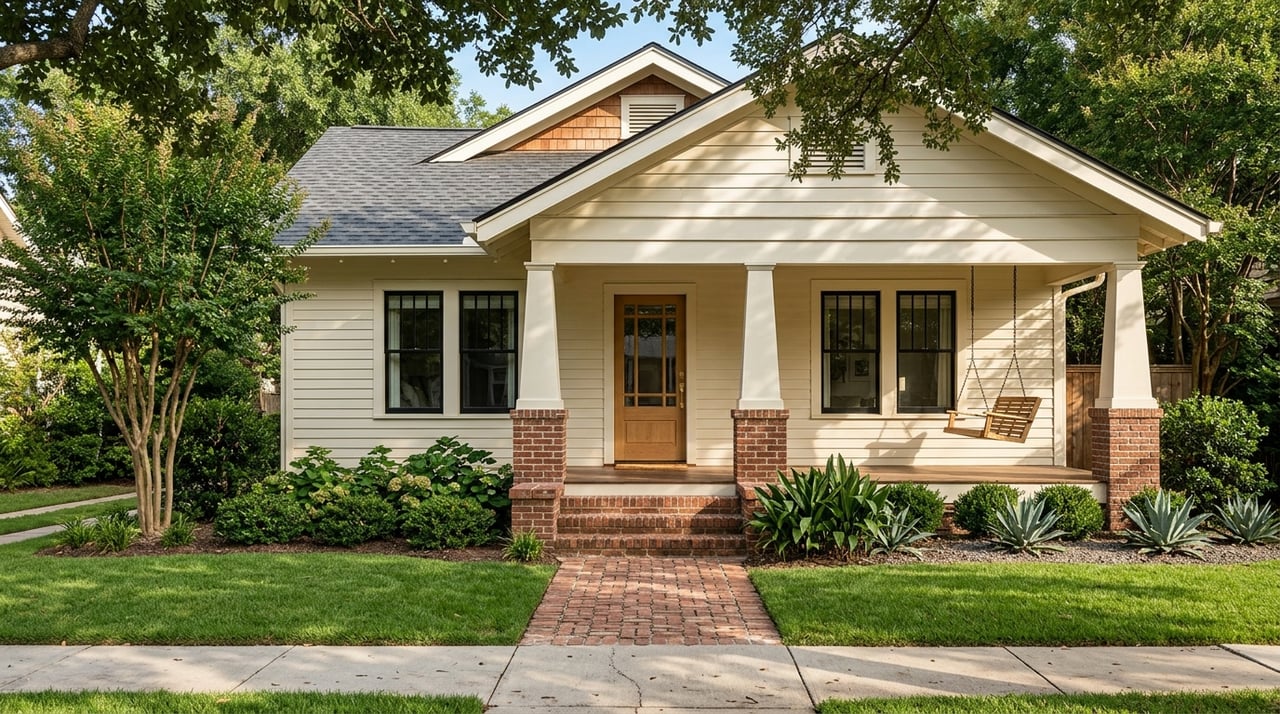
Munger Place has a cohesive look that sets it apart from many Dallas neighborhoods. The city describes the area with features like symmetrical facades, broad porches, deep eaves, and low hipped roofs, while SAH Archipedia highlights Prairie Style and Craftsman influences, including tawny brick, flat roofs, heavy brackets, and strong horizontal lines.
In simple terms, Munger Place does not feel like a mix of unrelated older homes. It reads as a neighborhood with a shared architectural language, which is a big reason buyers seeking design character often focus their search here.
There is some variation within the district. The Munger Place ordinance identifies separate tracts for Prairie-style single-family homes, Victorian buildings on Reiger Avenue, and a Collett retail tract, so the neighborhood includes a few different expressions within its historic framework.
What Homes and Lots Are Like
One reason Munger Place feels so orderly is that the district standards support a consistent streetscape. In the Prairie-style residential tract, the ordinance calls for a minimum lot area of 7,500 square feet, minimum depth of 120 feet, interior-lot widths of 50 to 70 feet, 25-foot front yards, 15-foot rear yards, and five-foot side yards.
The same ordinance also requires main buildings in that tract to be two stories, with minimum building widths of 30 feet on interior lots and 35 feet on corner lots. Those standards help preserve the scale and rhythm of the neighborhood.
For you as a buyer, that often translates into homes with a stronger relationship to the street, visible front porches, and a more unified block appearance than you might find in other older areas. It also means lot layout and exterior form are part of what is being preserved.
Porch Culture and Streetscape Feel
Munger Place is not just about architecture. It is also about how the neighborhood functions day to day.
The Munger Place neighborhood association describes the area as an active, porch-oriented community where neighbors talk with each other and gather for events such as porch parties, Easter egg hunts, jack-o-lantern carving, Halloween celebrations, and the Home Tour and Wine Walk. That kind of programming reinforces the social side of the neighborhood’s historic design.
The same source notes that the streets are sign-topped and lit in an early-1900s style. Combined with the preserved homes and front porches, that creates a distinct sense of place that many buyers are looking for when they say they want “character,” not just an old house.
Preservation Shapes Daily Ownership
Living in Munger Place comes with benefits, but it also requires a different mindset. Because the district is protected, exterior changes are closely reviewed.
The district ordinance includes rules tied to porches, facades, windows, doors, and fences. Porches must be covered and are typically 8 to 10 feet deep, facade materials are limited to period-appropriate options like brick, wood siding, and stucco, and fence standards generally keep front yards visually open.
This is often appealing if you value neighborhood consistency and architectural integrity. At the same time, it is worth knowing up front that flexibility is more limited here than in non-historic areas of Dallas.
A Planned Early Suburb Feel
Part of Munger Place’s appeal is how intentional it feels. According to the neighborhood association, the original subdivision included sidewalks, paved streets, shade trees, sewers, gas mains, and electric street lights.
That planning history still shows today. Instead of feeling patched together over time, Munger Place has a compact, legible layout with a strong historic core centered around streets like Junius, Worth, Tremont, Victor, Reiger, Collett Avenue, and Munger Boulevard, supported by the broader district boundaries described by SAH Archipedia.
For buyers, that creates a neighborhood experience that feels established and easy to understand. You can sense the original vision in the street grid, the lot patterns, and the way homes relate to one another.
East Dallas Lifestyle Access
A big part of the Munger Place lifestyle is what sits beyond the neighborhood itself. Its East Dallas location puts you near some of the area’s best-known outdoor and cultural destinations.
According to Dallas Parks, White Rock Lake is a 1,015-acre city lake with a 9.33-mile hike-and-bike trail and multiple recreation features. The Santa Fe Trail adds another East Dallas recreation option, with a 4.7-mile route connecting areas near Deep Ellum, Fair Park, White Rock Lake, and the SoPac Trail.
For those who enjoy gardens and seasonal events, the Dallas Arboretum and Botanical Garden is also in East Dallas on Garland Road just north of Highway 30. Taken together, these nearby amenities support a lifestyle that blends historic residential streets with easy access to trails, green space, and urban destinations.
Munger Place vs. Nearby Historic Areas
If you are comparing East Dallas historic neighborhoods, it helps to know that Munger Place has a more cohesive architectural identity than some nearby districts. Based on official district descriptions, it is strongly associated with Prairie and Craftsman forms.
By contrast, the Swiss Avenue Historic District Association describes Swiss Avenue as having the most diverse assortment of early 20th-century residential styles in the Southwest. That makes Munger Place a useful fit for buyers who prefer a neighborhood with a more unified visual rhythm rather than a broader mix of styles.
Neither approach is better in the abstract. It simply comes down to whether you are drawn to tighter architectural consistency or greater stylistic variety.
Who Munger Place May Suit Best
Munger Place often appeals to buyers who want more than square footage alone. If you care about historic design, front-porch living, and a neighborhood with a clear visual identity, this area checks a lot of boxes.
It may also be a strong match if you want East Dallas access to trails, parks, and established urban neighborhoods. On the other hand, if your top priority is making major exterior changes without design review, this may not be the easiest fit.
The key is aligning the home with your lifestyle and comfort level. In Munger Place, ownership is partly about stewardship, not just location.
What Buyers Should Ask Before Purchasing
If you are seriously considering a home in Munger Place, a few questions can help you make a more confident decision:
- Has the seller completed any exterior work that required historic approval?
- Are there planned updates you would want to make after closing?
- How do the district rules affect windows, porches, fences, or facade materials?
- Does the home’s current condition align with your renovation expectations?
- Are you looking for a preserved historic experience, or more design freedom?
These questions can clarify whether the neighborhood’s character and regulations support your goals long term.
If you are exploring Munger Place or other East Dallas neighborhoods, Texas Collective Group can help you compare lifestyle fit, historic district considerations, and the day-to-day realities behind the listing photos so you can move forward with confidence.
FAQs
What makes Munger Place homes historically significant in Dallas?
- Munger Place was developed around 1905, is one of Dallas’s early deed-restricted subdivisions, includes more than 200 homes, and is recognized as the largest intact collection of Prairie-influenced structures in North Texas according to the City of Dallas.
What does historic district status mean for Munger Place buyers?
- The City of Dallas says all work on properties in Munger Place requires a Certificate of Appropriateness, so exterior changes are reviewed under historic district standards.
What architectural styles are common in Munger Place?
- Prairie Style and Craftsman influences are the most prominent, with features such as broad porches, deep eaves, symmetrical facades, low hipped roofs, brick, and wood detailing.
What is the neighborhood lifestyle like in Munger Place Dallas?
- The neighborhood association describes Munger Place as an active, porch-oriented community with events like porch parties, holiday gatherings, and a Home Tour and Wine Walk.
What parks and trails are near Munger Place in East Dallas?
- Nearby East Dallas amenities include White Rock Lake, the Santa Fe Trail, and the Dallas Arboretum, offering access to trails, recreation, and garden experiences.
How is Munger Place different from Swiss Avenue?
- Based on official descriptions, Munger Place is more closely tied to a cohesive Prairie and Craftsman identity, while Swiss Avenue is known for a broader mix of early 20th-century architectural styles.